
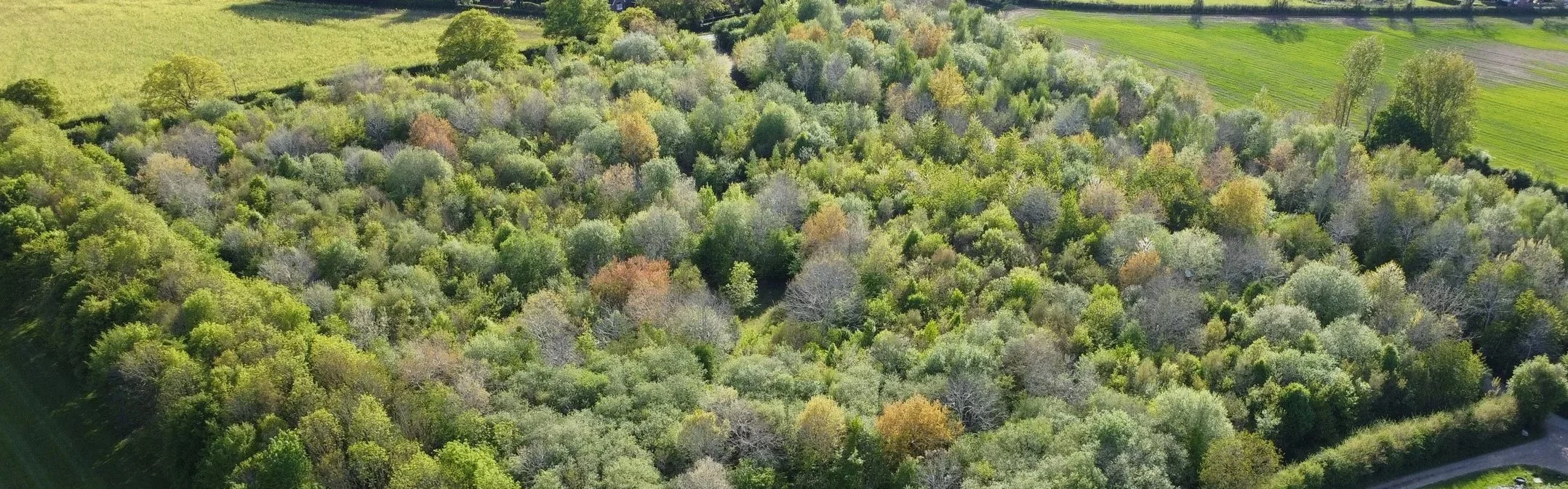
Rewilding
UK charity, Rewilding Britain, defines rewilding as ‘the large-scale restoration of ecosystems to the point where nature is allowed to take care of itself.’ We are of the belief that rewilding can happen at any and every scale - small, medium and large - and wholeheartedly agree that at its core, rewilding is about encouraging a balance between humans and the rest of nature so that we can all thrive together.
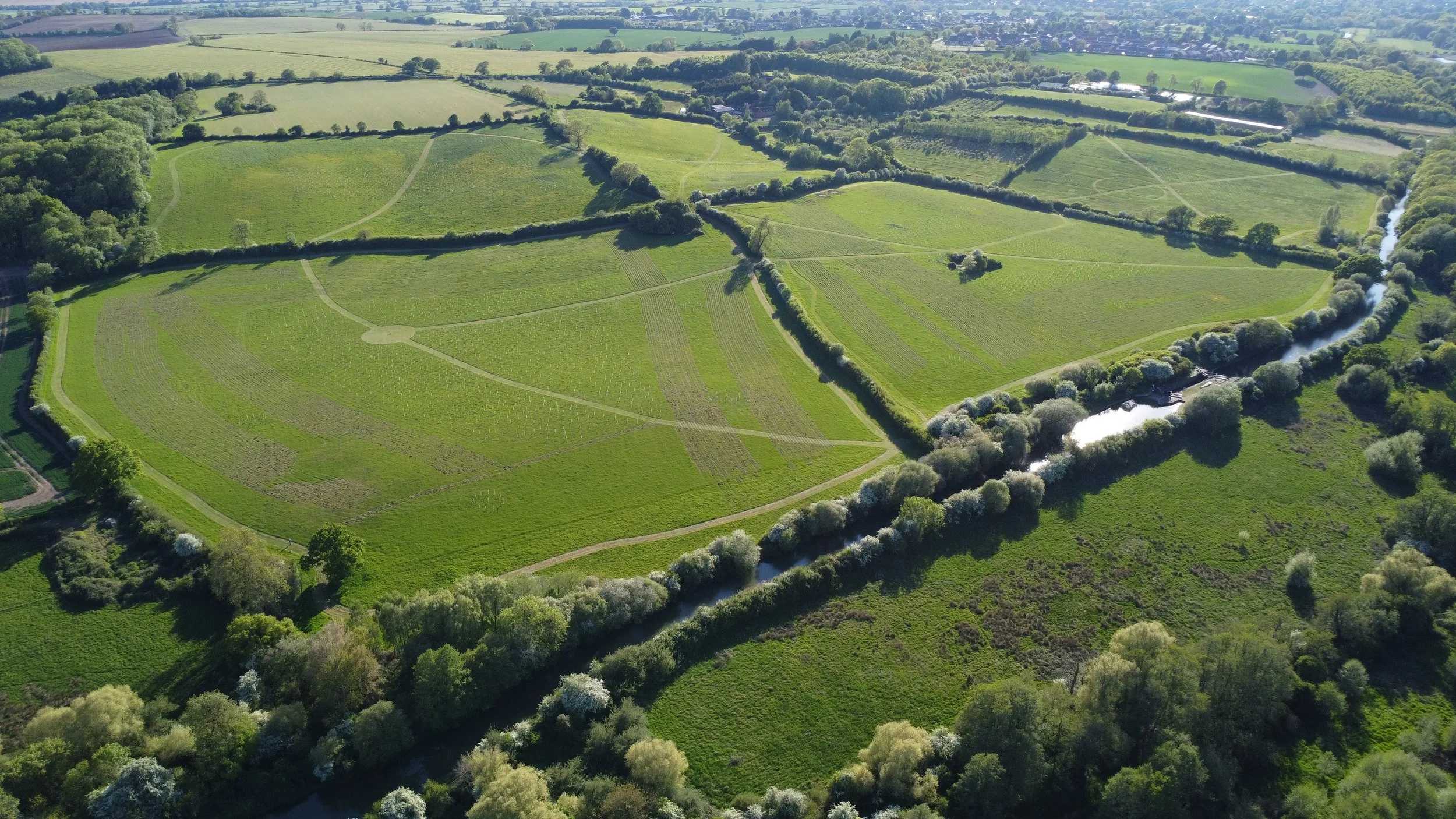
Aerial photograph of Leasowe Farm looking South West towards Royal Leamington Spa, with the Grand Union Canal snaking its way across the landscape and providing its own important human and wildlife corridor all the way from London to Birmingham.
Almost all of the 130 acres of land here at Leasowe Farm are part of a rewilding project that has been put into action as of the beginning of 2025. Funding through the Forestry Commission has meant that we’ve been able to take the majority of the land out of being grazed by livestock, and into woodland and landscape recovery. Whilst initially having done a certain amount of planting ourselves, over time the land will gradually be stocked with trees and plants that have arrived naturally, either by way of the wind or carried by animals. This process is known as natural colonisation or natural regeneration.
This project will be part of a wider plan to connect areas of priority habitat in the landscape. The importance of islands of wild land, such as woodlands and the scrubby areas that line the route of the Grand Union Canal that cuts through the farm, and the old railway lines that run close by, are magnified if we can connect them together. Our rewilding scheme will, for example, connect our young 20 year old Tallis Wood on one side of the farm with one neighbours’ woodland to the east and another neighbours’ woods that stretches along the canal to the north.
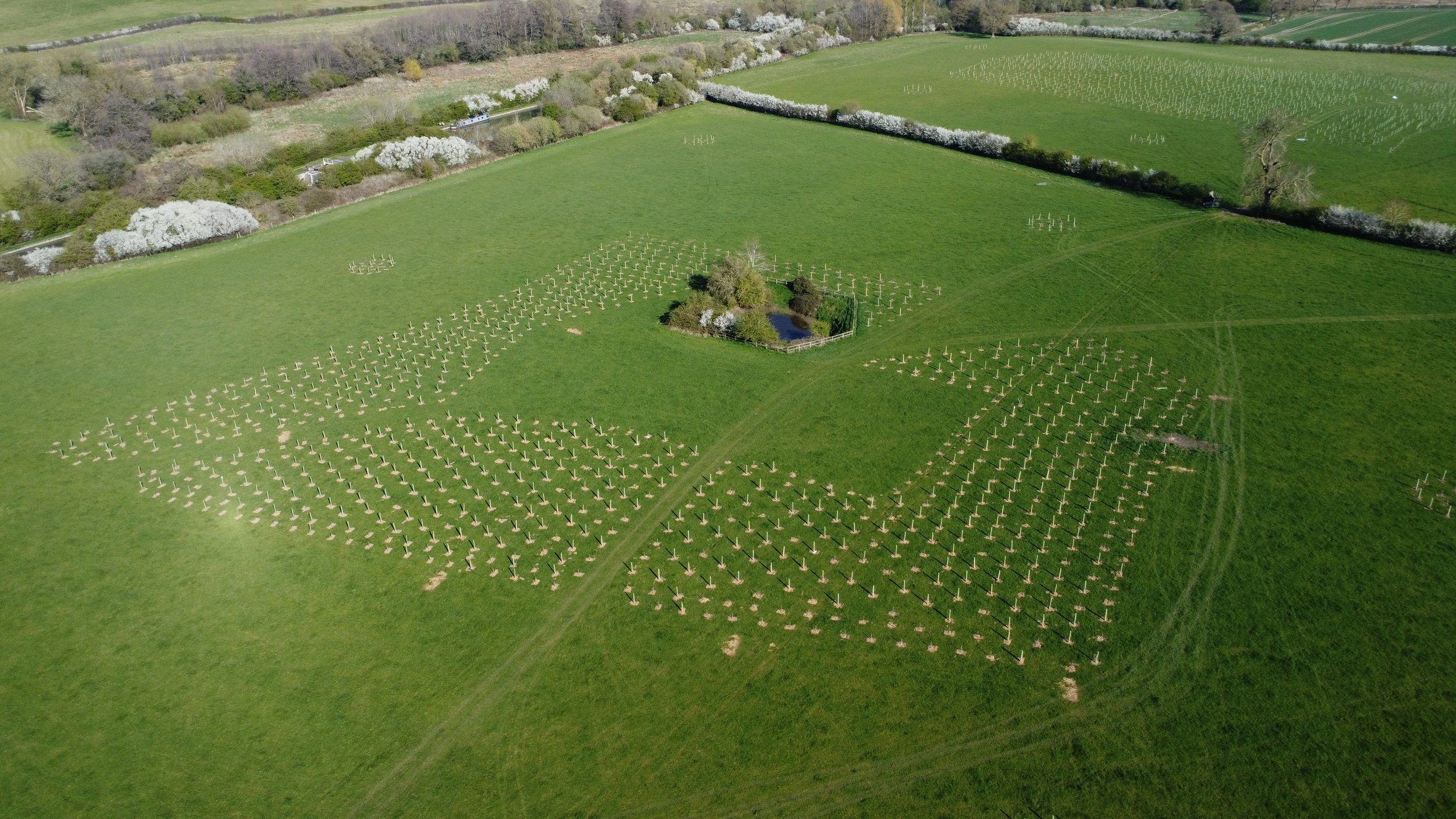
Photograph illustrating areas of newly planted trees in the middle of large fields in order to create a seed source for further natural regeneration.
With the large majority of the extra tree and hedge planting done, the idea now is that we take a little step back and allow nature to gently recover and regenerate by itself. Whilst we keep pathways mown across the farm, to allow for humans to easily access the land on foot, most of the grass is left to grow long, which in turn provides habitat for wildflowers to thrive and for seeds and nuts to be left to grow into saplings, and later trees. Areas of dense bramble can form to provide much needed protection for these vulnerable young saplings from the jaws of the roaming Muntjac and Roe deer herds that move across the land, whilst creating a new food source of their own - delicious blackberries! Another added bonus of leaving the grass to grow is that we’re also now able to see the numerous tracks and desire lines made by the many wild creatures that live here, including deer, foxes, rabbits, hares and badgers. In this way, the land feels like it is truly coming alive before our eyes.
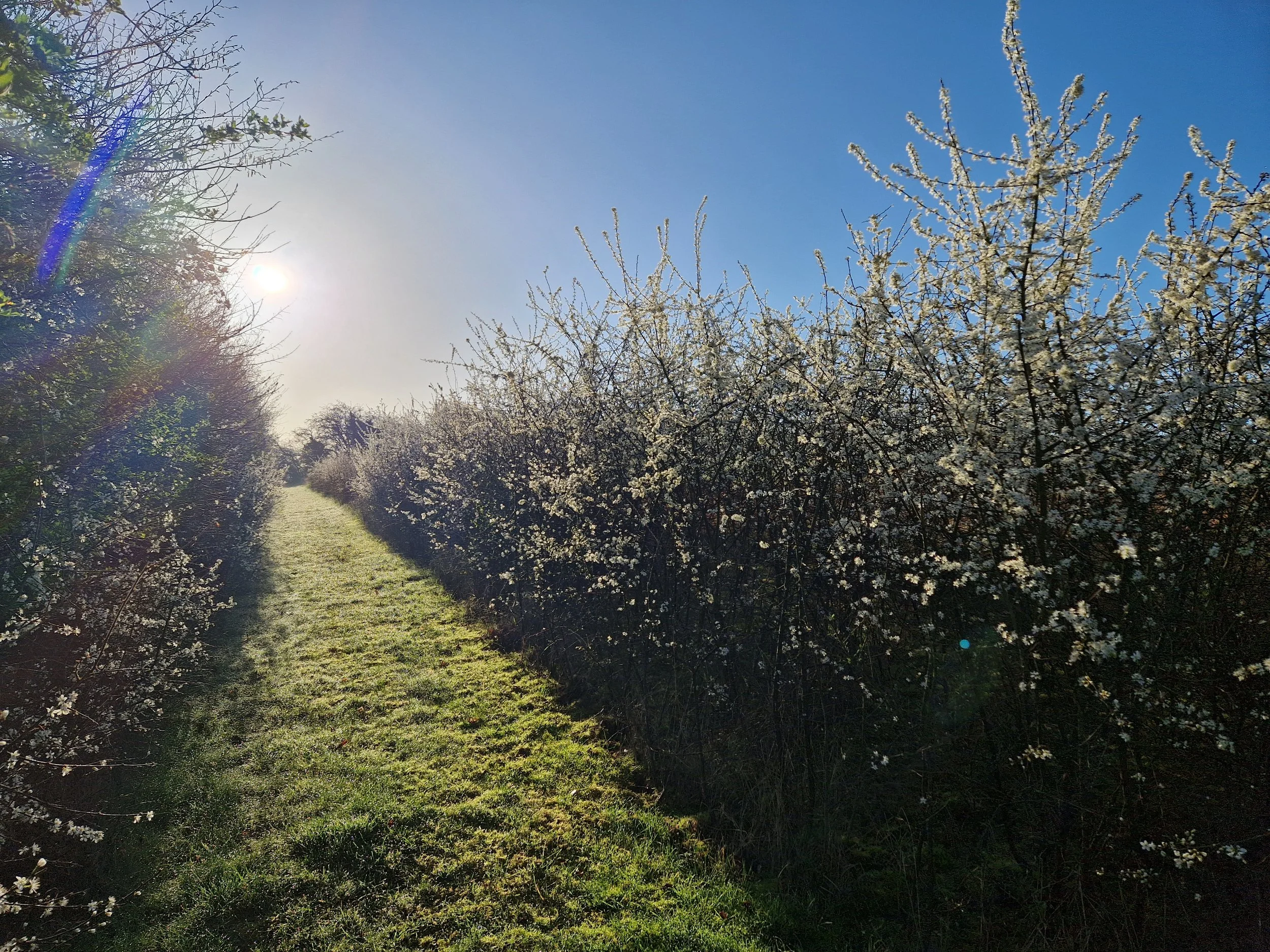
Photograph showing the natural regeneration of blackthorn thicket, with a mown pathway to allow for easier human access across the land.
The hedges all across the farm are already starting to move out into the fields, creating areas of dense blackthorn thicket and other trees. Blackthorn provides a wonderful source of early Spring flowers, offering nectar and pollen for crucial pollinators such as honey and bumble bees, whilst also providing important, protective shelter for nesting birds. We’re noticing new species of plants arriving every year, more bird species frequenting the skies above us, and more butterflies and moths finding food amongst the wildflowers and rotting fruit and nuts in the orchards that also make up the full picture of our farm.
Starting in 2026, it is our intention to start monitoring and surveying wildlife and vegetation across the farm, to help us chart the changes that the rewilding project is bringing about. This is a hugely important and informative aspect of a project such as this, allowing us (and others) to notice just what an impact rewilding is having. We are very blessed to have the support of some amazing individuals, together with whom we have formed a ‘Friends of Leasowe Farm’ group, and meet periodically to walk the land, formulate new ideas, and inspire different ways of thinking about what is possible with this project. We are always open to fresh and diverse perspectives, and are truly grateful to this collective of friends for all they continue to do to help, encourage and support us, and who love this land just as much as we do.
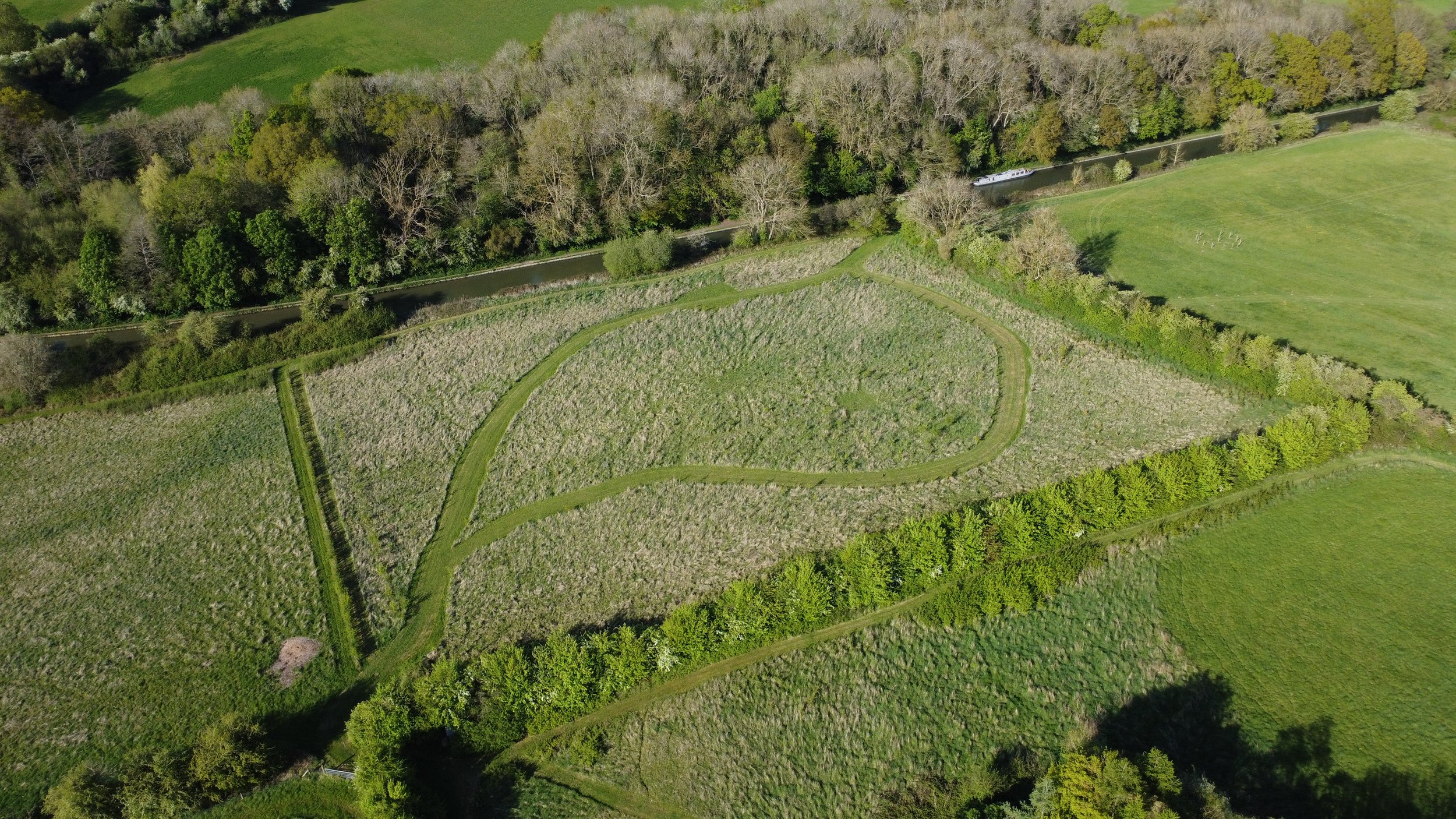
Photograph showing The Children’s Forest, a 4-acre field that is home to a project that engages local schools and community groups to create and nurture positive relationships to the natural world around them. Visit ARC for more information.
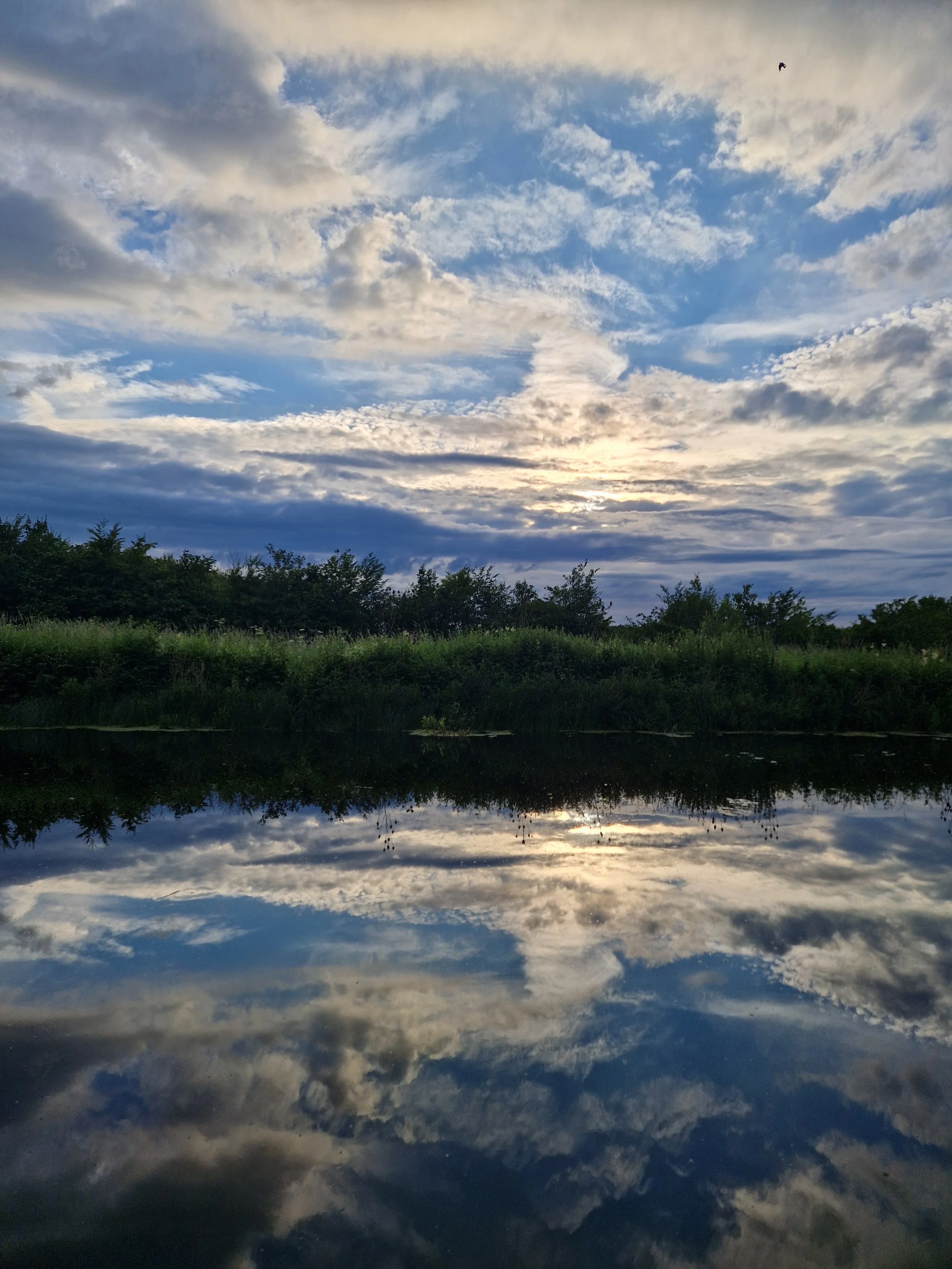
One of three wildlife ponds on the farm, offering important habitat and food sources for birds, bats, newts, frogs and insects, as well as providing access to much needed drinking water for larger animals.